Carriers speaking at the FTR Transportation Conference shared measures they’ve taken to survive a historic rate recession and admitted they don’t see any signs of a near-term improvement in market conditions.
Sam Anderson, CEO of Bay and Bay Transportation, said cost control has been his company’s priority as rate increases have been hard to come by.

“We made cuts over the last 18 months to get down to the size that makes more sense for this environment,” he said of parking trucks and right-sizing the fleet. “We are planning the market doesn’t change a lot in the next 12 to 18 months, so we’re going to continue to try to improve our costs. On the trucking side, we had to raise our rates. We saw costs go up 5% a year for three years and didn’t see rates go up. We had to try to get more productivity out of each truck we have.”
Werner Enterprises has been navigating those same difficult conditions, and it too has made adjustments in the process.
“We continued to shift one-way assets into our dedicated portfolio,” said Matt Parry, senior vice-president, account management with Werner. “A one-way environment is not investable in the current state. We’ve been shifting more and more [assets] to dedicated.”
He said the dedicated cycle is less cyclical.
Parry is a little more optimistic for the near-term and said the market isn’t improving but also isn’t getting worse. “It’s easier to see a decent peak season this year,” he said.
Bay and Bay has been investing in its freight brokerage, even though that market has become bloated post-Covid, where the number of active brokers in the U.S. surged from historic norms of about 21,000 to 31,000.
“We’d never been that high before,” Anderson said, noting the broker count has since pulled back to about 24,000. “We need a couple thousand more to exit.”
And that could soon occur. In doing its M&A due diligence Bay and Bay looked at 15 brokerages that hadn’t made any money for two years.
“It’s pretty hard not to make money in brokerage,” Anderson said. “You’re essentially just managing margin. There were a lot of new entrants who didn’t know what they were doing.”
The company is looking to home in on niches such as intermodal, Mexico cross-border and flatbed.
Parry has noticed a shift to quality among big shippers, who have seen service deteriorate when using low-cost carriers that entered the market post-Covid.
“We’re finding a lot of people that got into the business the last several years don’t understand the complexity and difficulty of it and there’s a move to quality,” he said.
At Bay and Bay, there has also been a heightened focus given to the company’s top customers. “We want to be 98% on time and accept 98% of tenders offered by our core customers,” he said. “Those customers are looking for something that differentiates them to their customers and we help them with that.”
Werner’s Parry agreed, noting the carrier seeks out relationships with shippers that are “winning in their space.”
“Understand who your customers are and lean into the ones who are most successful so they value what you bring to the table and are in a position to make good long-term choices,” he added.
As for why capacity has been slow to exit the market, Anderson feels banks are giving fleets lots of rope since the used truck market is also down. “There’s not a lot of equity built in those pieces of equipment and banks aren’t any better at selling equipment than most truckers,” he noted.
Anderson also said there are many fleets in the 200-700 truck range that are struggling and are “one big accident or customer loss away from not being able to continue.”
Lower fuel prices may also be keeping some operations afloat, especially smaller operators without good fuel network discounts.

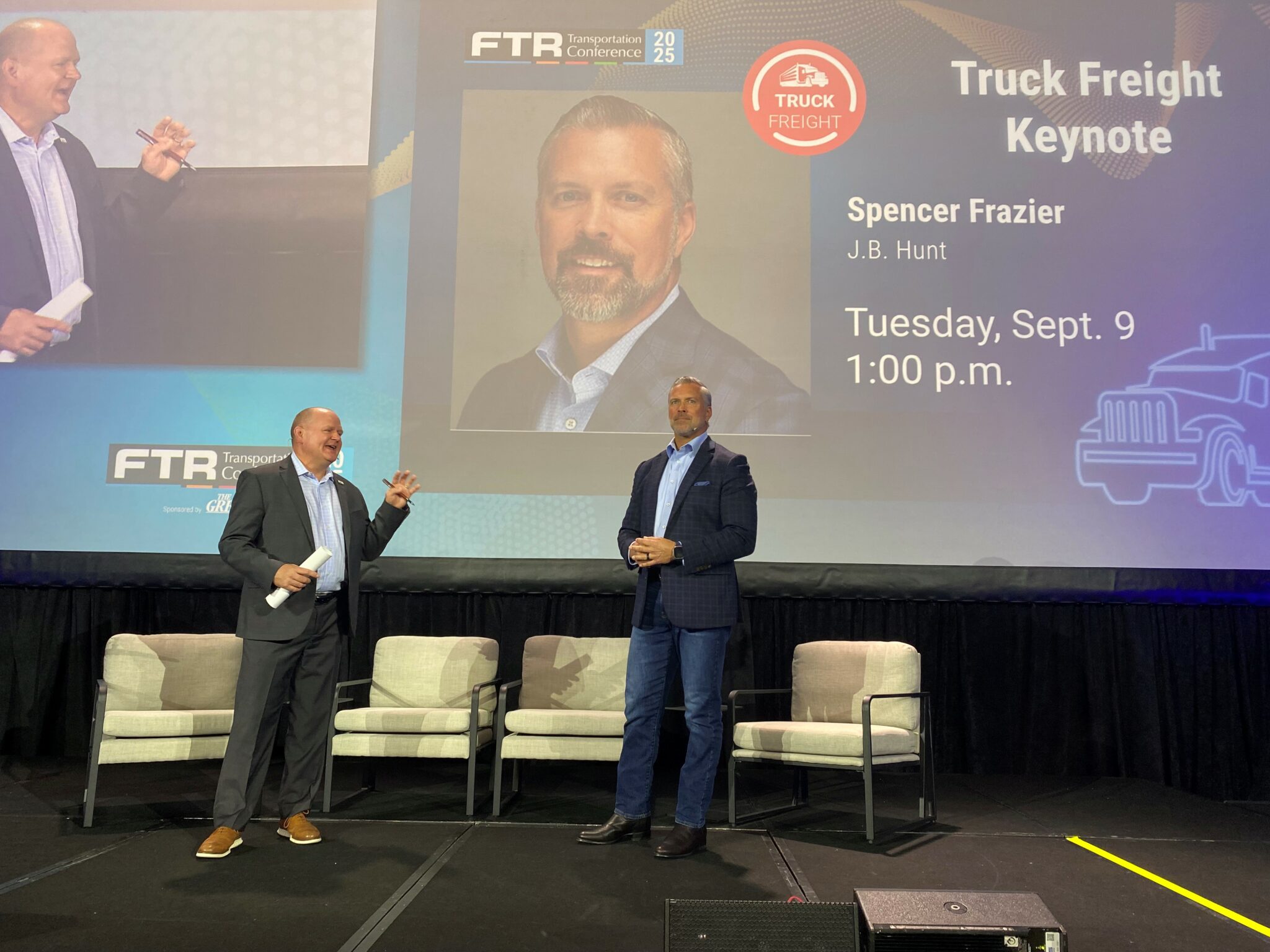
Talking as a keynote speaker later in the day, Spencer Frazier, executive vice-president of sales and marketing with J.B. Hunt Transport said he looks to the company’s customer base to determine industry health.
“Our customers are challenged right now, probably more than they have been ever before,” he said.
However, he said consumer spending and the resiliency of American businesses give him reason for optimism. Over the last three years, J.B. Hunt has “pre-funded its growth” through acquisitions.
“We feel we are in a position to support growth when it does materialize on the demand side,” Frazier said. He also noted a recovery could happen faster than anyone expects. “The speed of Trump is faster than anything we’ve seen in our lifetimes,” he said.
Frazier also said shippers are well aware the current environment of inflationary costs and deflationary rates, is not sustainable. However, he noted they are resistant to rate increases because they face their own internal pressures to not just keep transportation costs steady, but to decrease them.
“Rate is not the only answer,” he added. “Finding more efficient ways to move product across our customers’ supply chains is.”
J.B. Hunt is in the process of taking about US$100 million of costs out of its operations. It is also focusing on its people and increasing discussions with drivers and maintenance staff. It increased healthcare coverage for its employees, which Frazier said was a major concern among its people.
The company is also incorporating more technology, including artificial intelligence, to become more efficient.