
Artificial intelligence is moving rapidly into mainstream trucking operations, and it is already reshaping how maintenance, planning and safety decisions are made.
Bison Transport associate vice president of network analytics and development Dave Fulawka and Thomas Solutions president Nicholas D’Amico told attendees at the Ontario Trucking Association’s recent annual conference in Toronto that fleets adopting the technology early will be far better positioned as economic pressures intensify.
Fulawka said the downturn is one of the worst he has seen, but he believes fleets will endure. He said people will still need essential goods and carriers must focus on the things they can control.

He explained that much of his work now involves using an agent interface tied to a large language model. Bison uses Microsoft Copilot because the carrier is already a Microsoft customer, and that gives it a private environment where interactions remain secure.
Fulawka demonstrated how he feeds natural-language queries into the system and lets it process tasks that previously required hours from analysts. While the model can return “hallucinations” or incorrect answers, he said rerunning or refining the query typically fixes it, and recent work showed AI recommendations that closely matched manually calculated results.
D’Amico said Thomas Solutions began its digital shift five or six years ago when the fleet had no AI, no e-logging and no dash cameras. After implementing forward-facing and driver-facing cameras, the company began pairing video with telematics and analytics.
Reducing fuel costs
He said preventing incidents before they happen became a major focus, and the fleet reduced fuel costs by 15% to 30% depending on vehicle, laneway and run.
Predictive maintenance now alerts shop staff through automated emails, so technicians know what is happening before the truck arrives. Compliance functions, including inspections and hours of service, have also moved into digital workflows that reduce paperwork.
Both speakers said the early wins from AI come from safety and driver performance. D’Amico said unsafe driving indicators such as speeding, texting, smoking, fatigue and harsh braking now appear in real time through dashboards that operations staff can access instantly.
Acting on data
He said the real work becomes deciding how to act on the data, whether coaching, discipline or changes in staffing. The company has seen a more than 500% reduction in incidents over three years, and he attributes it to better visibility and consistent follow-through. D’Amico also pointed to national metrics showing AI tools can bring sharply lower accident-related costs, fewer unsafe-driving events and reduced insurance premiums.
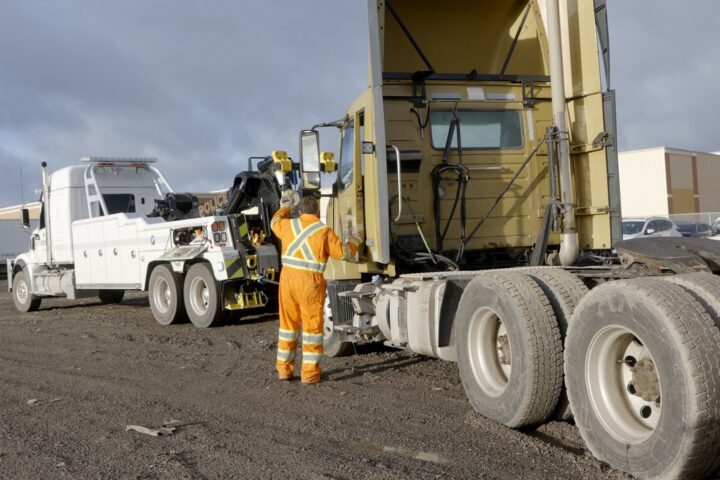
Fulawka said AI-driven diagnostics are proving especially practical in shops. In a real-world test, photos and basic inputs were enough for a language model to identify what was wrong with a truck and outline potential repairs.
He said this can support junior technicians or those in small, remote locations with only one bay. Larger shops with warranty-trained staff may use it less, but the capability already exists.
Helping with equipment decisions
D’Amico said AI is also helping the fleet make equipment decisions. Large data sets allow Thomas Solutions to see whether a specific improvement came from a good driver, a good truck or the type of freight and laneway.
That data now guides major asset purchases and spec’ configurations, including axle spreads, load placement and lane-specific setups. He added that understanding different specifications for Ontario, Quebec and other regions is now easier because AI models can compare requirements and suggest the most efficient approach.
Fulawka said shippers are already using machine learning tools in pricing models, placing up to 40% of freight on spot bid to read the market and gain a cost advantage. Bison monitors those patterns and uses them to negotiate contract opportunities when performance signals are strong.
Understand limits of technology
He said fleets need to understand that customers “are using AI against us,” and carriers must learn to neutralize it.
Both speakers said fleets must understand the limits of the technology. AI can carry bias and return different answers depending on geography or query phrasing. Public chatbots should not be used for sensitive operational data. As regulation evolves in Canada and the U.S., fleets will need more transparency around how automated decisions are generated, especially in safety-critical systems.
Neither expects full autonomous trucking to arrive soon, but both said driver-assist tools will grow quickly. They said that fleets experimenting with AI now will gain advantages once market conditions improve.
The message from both was that AI will not replace people, but it is reshaping the work and carriers that act now will run safer, leaner and more competitive operations.