The leader of a highway safety coalition said the group is prepared for what is expected to be a critical year ahead for transportation in the United States.
“We know there will be efforts to roll back motor vehicle safety standards for passenger vehicles and trucks,” said Cathy Chase, president of Advocates for Highway and Auto Safety. “This is outrageous and must be defeated.”

Chase, who spoke at a press conference to unveil the Advocates’ 2026 Roadmap to Safety report, outlined the group’s stance ahead of the September expiration of the $1.2-trillion bipartisan Infrastructure Investment and Jobs Act (IIJA).
“Every surface transportation reauthorization in modern times has included a robust vehicle safety title, and this one should be no different, considering the death and injury toll on our roadways,” Chase said.
Previous transport funding laws this century were the Fixing America’s Surface Transportation (FAST) Act, the Moving Ahead for Progress in the 21st Century (MAP-21) Act, and the Safe, Accountable, Flexible, Efficient Transportation Equity: A Legacy for Users (SAFETEA-LU) Act.
Chase stressed that a trend of dangerous driving on U.S. roads, which began during COVID-19, has continued, even as we have put the pandemic in the rear-view mirror. In 2023, the most recent year with finalized statistics, 40,901 people were killed in crashes, and an additional 2.44 million were injured, resulting in $439 billion in economic harm. The fatality figure is up 26% since 2011.
These figures are why Chase called on the U.S. Department of Transportation to advance vehicle safety technologies mandated by the IIJA, including automatic emergency braking with pedestrian protection. She added that in the next highway bill, advocates would push for minimum safety standards for automated driving systems and driver monitoring or driver support systems “to ensure that an aware and capable person is behind the wheel.”
Chase expressed particular concern that DOT could seek to weaken the rule requiring AEB to be standard on new passenger cars and light trucks by September 2029.
Sen Ted Cruz (R-Texas), chairman of the Senate Committee on Commerce, Science, and Transportation, has scheduled a Jan. 14 hearing on new-car affordability. He said “onerous government-mandated technologies” are a key reason the average new car price has reached $50,000.
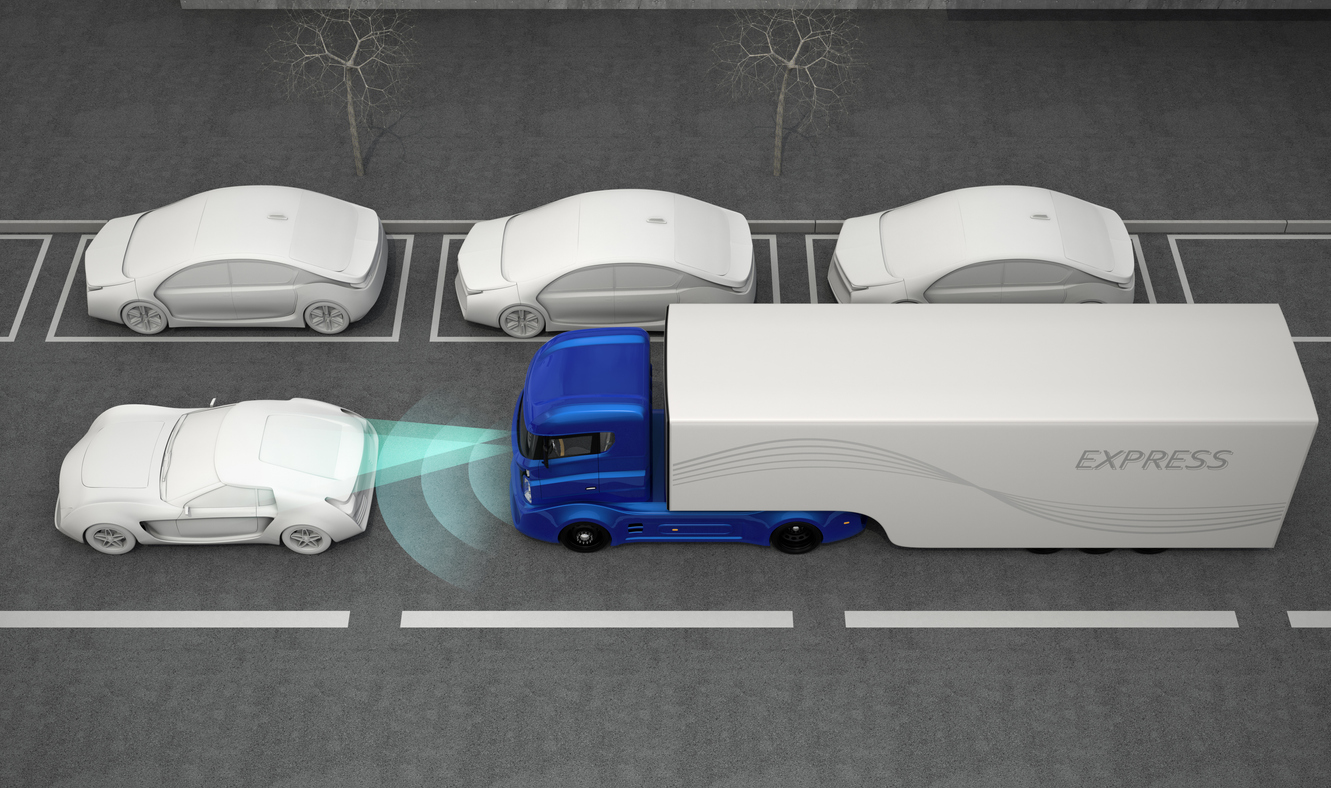
In 2023, the Federal Motor Carrier Safety Administration and the National Highway Traffic Safety Administration issued a proposal requiring AEB systems on heavy vehicles. After a delay in finalizing the rule, there has been an expectation that the agencies would issue a supplemental proposal before the end of 2025. Attempts by trucknews.com to get an update on the status of the heavy truck AEB rulemaking have been unsuccessful.
As far back as 2015, the American Trucking Associations supported making AEB standard on new vehicles.
States receive annual rating based on safety laws
Chase was joined at the press conference by lawmakers, law enforcement personnel, and family members of accident victims. They unveiled Advocates’ 2026 Roadmap to Safety report card, which rates states on their progress in adopting 18 traffic safety laws covering speeding, red-light running, seat belts, impaired and distracted driving, motorcycle helmet laws, and young driver restrictions.
Only five states (Md., N.Y., Ore., R.I., Wash.) and D.C. received a green rating, showing significant advancement toward adopting all recommended laws.
Nine states (Idaho, Mich., Mo., Mont., Neb., Nev., Okla., S.D., Wyo.) received a red rating, indicating they are falling behind in adopting these laws. The remaining states received a yellow rating, indicating that improvement is needed.
A warning for unrestrained passengers
Advocates’ report emphasized the group’s belief that stricter seat belt laws, for both drivers and all vehicle passengers, could save thousands of lives annually.
In 2023, nearly 24,000 passenger vehicle occupants died in motor vehicle crashes, and it is estimated that almost half were unrestrained. Among passenger vehicle occupant fatalities with known restraint use, 48% were seated in the front row, and 59% of those in the second row were unrestrained.
A 2017 poll from the Insurance Institute for Highway Safety found that nearly 40% of respondents sometimes did not buckle up in the rear seat because no law required it. If such a law existed, 60% of poll respondents said it would convince them to use seat belts in the back seat.
Unbelted rear-seat passengers are referred to as “back seat bullets” because they can be thrust at high rates of speed into the driver. The chance of death for a belted driver seated directly in front of an unrestrained passenger in a serious head-on crash was 2.27 times higher than if seated in front of a restrained passenger.