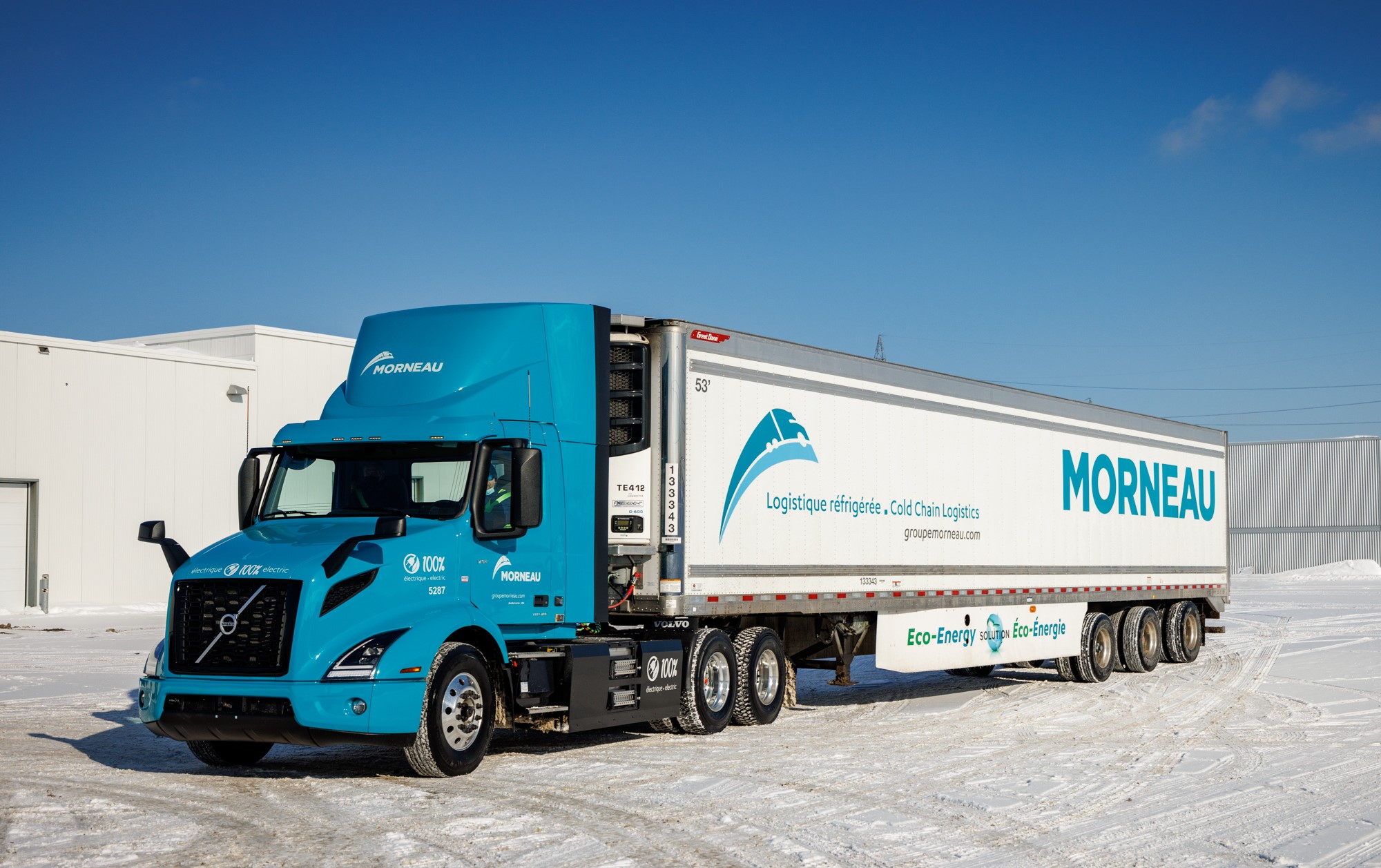
Will it eventually be possible to carry out heavy-duty long-distance transport with electric trucks powered by batteries?
That’s a question the HVTT18: Trucking toward S2MART global summit, held at Laval University, Eddy Zuppel, program leader, clean and energy-efficient transportation at the National Research Council of Canada (NRC), set out to answer.

HVTT18 shared findings of a report produced in 2023 by the NRC for Transport Canada’s Zero-Emission Transportation and Trucking Program. It is divided into sections: basic battery technologies; minerals used in batteries; charging infrastructure; and battery adoption.
Transportation is an important sector to decarbonize, but this presents significant challenges due to the extreme payloads and the energy requirements of vehicles.
“Many different technologies are being considered to decarbonize this sector, such as hydrogen and alternative fuels. And one of the key technologies is the battery, which stores energy and therefore replaces the diesel fuel tank,” said Zuppel.
It goes without saying that heavy-duty trucks require much larger batteries than those found in light-duty vehicles. We’re talking about batteries of 1,000 kWh and more, compared to 60 to 75 kWh for passenger cars. “This difference poses considerable technical challenges, particularly with regard to energy management, component durability, and system integration,” says Zuppel.
When it comes to batteries, two main families dominate today: high-density chemistries (NMC, NCA) and lithium iron phosphate (LFP) batteries.
The former offer high capacity, but are expensive due to the presence of cobalt, a material with unstable supply. Their durability is also limited, especially with high nickel concentrations. LFP batteries are more affordable, safer, and more durable (more than 2,000 cycles), and do not contain cobalt. On the other hand, their energy density is lower, which limits their use to short or medium-distance trips.

Performance objectives: Where are we?
The industry is seeking to achieve certain targets for batteries used for long distance.
The energy density of current NMC (nickel-manganese-cobalt) or NCA (nickel-cobalt-aluminum) batteries offers approximately 150 Wh/kg. The goal is to reach 250 to 300 Wh/kg to limit range and weight issues.
Regarding lifespan, Zuppel noted that current NMC batteries offer between 1,000 and 2,000 cycles. However, long-distance transport requires greater durability.
And there’s also the issue of battery pack purchase price, which must come down to offer buyers an acceptable total cost of ownership. Currently, the cost of a battery is around $135 per kWh. The goal is to get it below $100, which could happen within the next three to four years.

Payload penalties and cold climate
The reduced payload due to the weight of the batteries is an often-mentioned drawback. “For a range of 500 km, this can represent a penalty of around 10%. If the distance traveled is greater than 500 km, this penalty will increase,” said Zuppel.
Cold climates, on the other hand, pose a real challenge — especially in Canada. At -8°C, range loss can reach 8%. At –25°C or –30°C, this loss climbs to 40 or 50%. Energy is used not only to heat the cabin, but also to keep the batteries at an optimal operating temperature (between 15 and 20°C).
“Advanced thermal management strategies and new materials will be needed to reduce the impacts of cold and take advantage of new battery chemistries that are more resilient to extreme temperatures.”
Debunking preconceived ideas
Zuppel wanted to deconstruct certain preconceived ideas surrounding electric trucks:
Batteries are too heavy: Although they add weight to the vehicle, most cargo is not limited by weight but rather by volume. Some jurisdictions in the U.S. and Europe allow electric trucks to exceed prescribed weight limits in an effort to transition to new clean technologies.
Long-distance travel is the norm: More than 90% of heavy-duty truck trips in the U.S. and more than 97% in the European Union, are less than 800 km, which modern batteries can already cover.
In fact, the rise of e-commerce has reduced the average transport distance by around 40% in 20 years, making journeys shorter and more practical for electrification.
In the short term, manufacturers are seeking to reduce battery costs by modifying the composition of the cathodes and favoring more nickel and manganese. On the anode side (usually graphite), the addition of silicone increases energy density.
“In the long term, increasing the concentration of metallic lithium in the anode would increase energy density, but this would require solid electrolytes to stabilize this more volatile material,” said Zuppel.
Among other promising solutions, Zuppel mentioned lithium-sulphur or sodium-ion batteries, which use more abundant and less expensive materials. However, their energy density and lifespan still need to be improved.