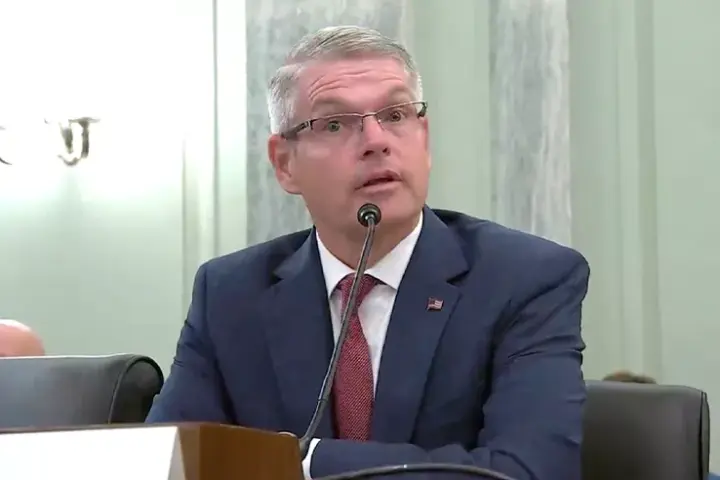
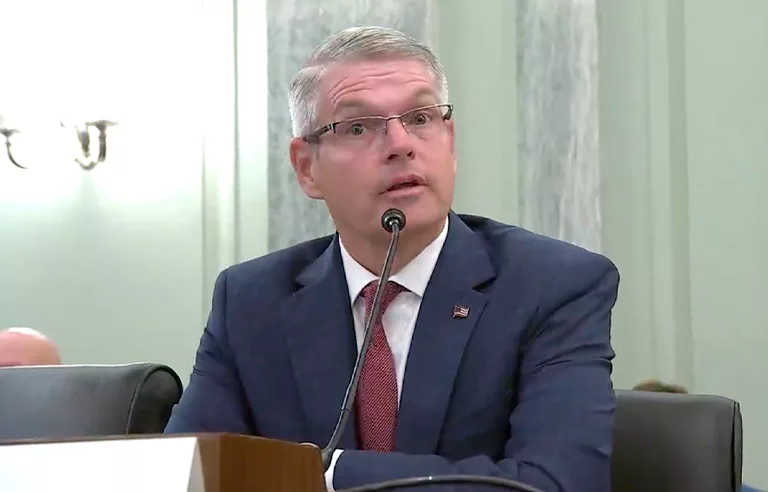
The self-certification processes for truck driver training schools and electronic logging devices have made it too easy for bad actors to exploit the system and need to be strengthened. Combined with enforcement of English language proficiency standards, these actions will make sure “we have qualified drivers on our roadways,” said Derek Barrs, head of the Federal Motor Carrier Safety Administration.
Barrs provided a lengthy regulatory update on Dec. 11 at the Traffic Club of Jacksonville, Fla. It was a homecoming event for Barrs, who has lived in the area for 25 years and served as chief of the Florida Highway Patrol. But he has spent much of his time in Washington or on the road since being confirmed by the U.S. Senate as FMCSA administrator in October.

Self-certification of truck driving schools
Even before his confirmation, Barrs said staffers were reviewing driver training schools on FMCSA’s registry to determine whether they had the required qualifications and were complying with the rules.
He admitted there has been insufficient oversight and that it has been far too easy to self-certify as meeting the federal entry-level driver training standards.
“If we have people who are operating schools in this country and they’re just pushing people through, it is my job to make sure they no longer do that and are put out of business,” Barrs said.
He said 330 investigators have been deployed across the United States to inspect 1,600 training locations. Over the past two months, 3,000 schools were removed from the registry, and another 4,500 are at risk of removal within the next 30 days. Some of these are inactive schools that were not previously removed.
Looking ahead, Barrs said the agency needs to consider long-term compliance options to ensure schools maintain high standards.
Self-certification of ELDs has led to cheating
The self-certification process for ELDs in the United States has also created problems, Barrs said. With so little oversight, FMCSA’s registry has grown to more than 1,000 devices. FMCSA knows that some noncompliant devices are being used to alter available driving hours and other information illegally.
“We have to get away from self-certification,” Barrs said.
Earlier this week, FMCSA added three more ELDs to its revoked devices list for failure to meet minimum requirements, bringing this year’s total to more than 70. Barrs said the agency has rejected 200 other ELD products before they could reach the market for failing to comply with the regulation.
Barrs called the recently announced overhauled vetting process for ELDs a stopgap measure while the agency determines the next regulatory steps in consultation with other stakeholders. The new process closes a loophole that allowed ELD providers to register non-compliant devices or re-register devices that had been revoked.
English-language proficiency remains a priority
Barrs also emphasized the importance of enforcing English-language proficiency standards for truck drivers as part of a broader regulatory review of the CDL licensing system.
U.S. Transportation Secretary Sean Duffy announced on social media that 9,500 commercial truck drivers have been taken off the road this year for failing to meet federal English-language requirements. Barrs said FMCSA is still reviewing its enforcement policies to get off the road those “who should not have been on our highways to start off with.”
In response to an audience question, Barrs clarified that English-language proficiency is an out-of-service violation, but not a disqualifying offense. A CDL is not immediately revoked, and there is no regulatory authority to impound the vehicle. As a result, it is too easy for noncompliant drivers to return to the road.
New Motus registration system to make fraud more difficult
Barrs said FMCSA is aware of the illegal buying and selling of MC and DOT numbers, but the agency has limited regulatory authority to curb the practice at this time. Efforts to crack down on these illegal sales must avoid hindering legitimate business transactions that include the legal transfer of these assets, he said.
Barrs touted FMCSA’s new Motus registration system as an important tool in catching bad actors. The initial launch began on Dec. 8, with the full rollout scheduled for March. The Motus program will have a procedure to verify that only authorized personnel update information.
Changes to medical certification process on horizon
Barrs also suggested that changes to the self-certification process for medical review officers (MROs) were likely, but would not occur in the near term.
MROs are licensed physicians who review drug and alcohol test results for DOT-regulated drivers. They currently self-certify their qualifications for the drug and alcohol clearinghouse.
Drivers also self-certify their operating status, which requires a valid medical certificate from an FMCSA-registered examiner.