I recently came across an eye-opening recruiting ad on LinkedIn. An Ontario-based carrier is offering a $2,500 sign-on bonus for qualified drivers with manual experience and a non-restricted Class A license.
“If you’re one of the few who still drive stick, you’re one of the few we want,” the ad proclaims.
How about that; someone still values fundamental driving skills. To borrow a term from the aviation industry: “stick-and-rudder” skills. But do manual transmissions automatically (sorry for the pun) make better drivers?

I think there’s something to that, but I don’t think we can blame a box full of gears for the decline in the caliber of entry-level drivers.
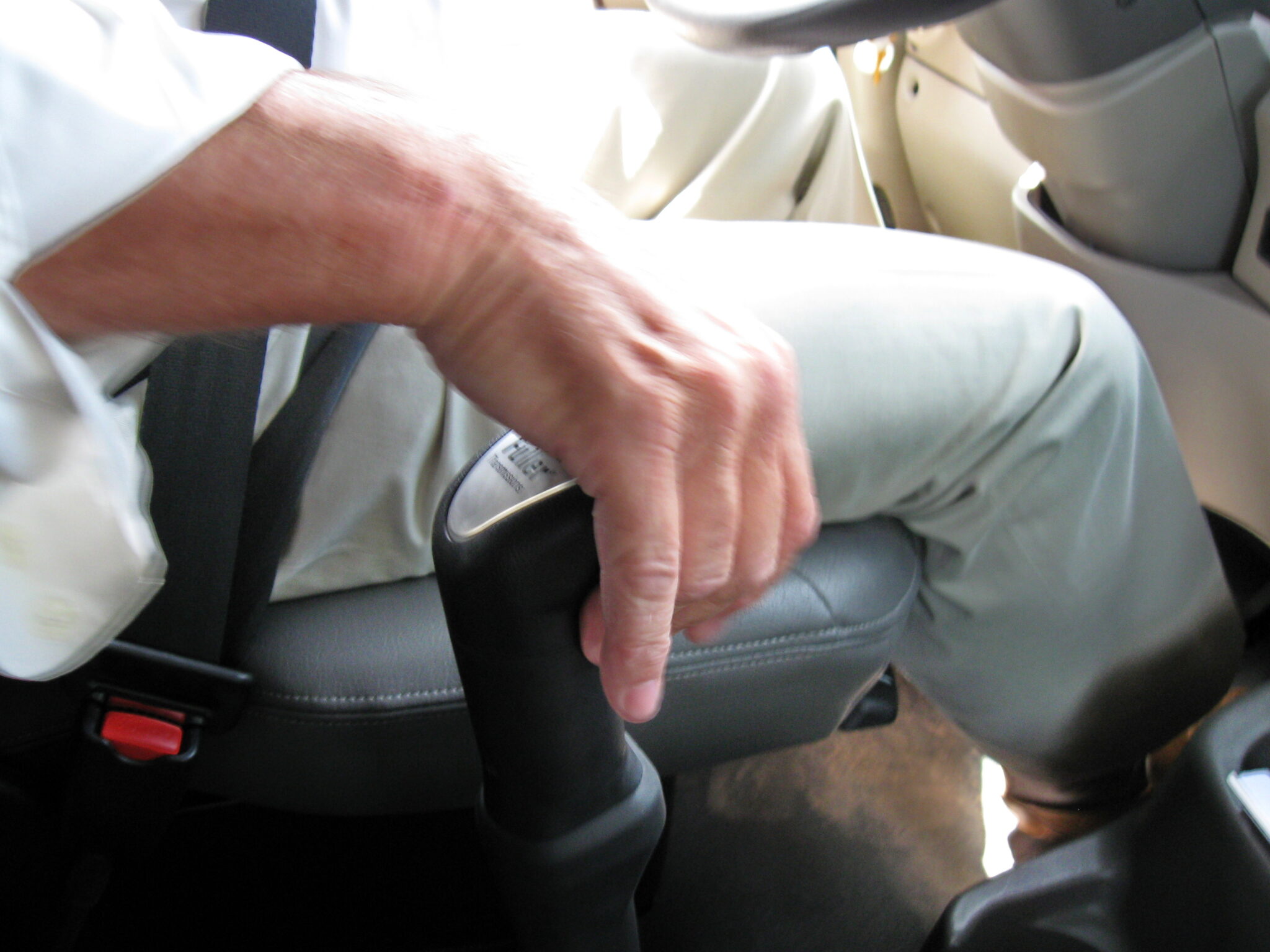
It’s not just about mastering double-clutching or float-shifting that makes manual drivers better. I think shifting gears manually fosters a better understanding of vehicle dynamics. The gearshift lever and the clutch pedal provide a physical and tangible link between the driver and the wheels. You feel the weight of the truck. You feel the size of the truck.
Those are almost an afterthought with automated manual transmissions (AMT).
Unlike AMTs, manual transmissions keep the driver engaged and in the control loop. My friend, and owner of Mountain Transport Institute in Castlegar, B.C., Andy Roberts, explains it this way: “I think the most important benefit of training on a manual is that students learn to plan ahead and be prepared for what is coming next,” he told me. “If you need to make a tight turn at the next intersection that requires third gear, you need to start downshifting far enough back to be in the correct gear as you approach the intersection.”
Unless the proper background is instilled in student drivers from Day 1, AMTs can make driving an 80,000-lb. truck little different from driving a minivan.
The obvious advantage to AMTs in the driver training sphere is time savings. Roberts says it takes a week or two of daily practice for drivers to become reasonably competent drivers using a manual. AMTs can slash that to a couple of days.
“Students can learn how to drive well enough to pass the road test in about 10 hours behind the wheel of an automatic truck,” says Cara Hunter, president of Transport Training Centres of Canada.
But as we are all painfully aware, many driving schools use that time savings to their advantage rather than the students’.
“The big demand for automatic truck training comes from the “schools” that provide those $3,000-$4,000 courses,” Hunter adds. “They are obviously not providing the number of training hours prescribed by MELT (mandatory entry-level training).”

Mistaken focus on AMTs
Let’s be clear; teaching entry-level drivers on an AMT is not necessarily wrong. If the AMT is just a shortcut to a commercial license, then the students are being ripped off, and the public is put at risk when poorly trained drivers are turned loose on our highways.
The students don’t know what they don’t know and so are likely to make more mistakes than a more thoroughly trained driver. That’s the fault of the school and the instructor rather than the transmission.
Transport Training Centres of Canada offers instruction on both types of transmission.
“Most people who inquire about our A/Z (CDL) training are aware of and don’t want a restriction on their license,” Hunter says. “They don’t want to limit their employment opportunities by having a restricted license.”
She starts her students on a shifting simulator, which is a pretty efficient way of introducing them to manual unsynchronized transmissions. Some grasp it fairly quickly. Others struggle and ultimately opt for training on an AMT and, ultimately, a restricted Class A license (CDL).
That’s consistent with Radek Rogowski’s experience. He’s the operations manager at Richards Truck Driving School in Mississauga, Ont. He says about 60% of his incoming students begin their training on a manual, but only about 30-40% complete their training with a manual gearbox.
“I encourage them [to learn on the manual] because I believe understanding shifting and understanding the operation of the transmission helps you understand how the vehicle and its power curves work,” he told trucknews.com “I like to push them towards that, but it’s not for everybody.”

Personal experience
I had my own struggles with my first unsynchronized manual transmission. I had been driving straight trucks with 5- and 6-speed synchronized transmissions for about three years before I encountered my first non-synchronized manual. I also had the benefit of experience with vehicles heavier than my Datsun B210.
It was an Eaton Fuller 10-speed manual in my company’s tandem axle straight truck. I had never had to double-clutch prior to that, and I had no idea what float shifting was. For you, AMT drivers, that’s shifting a manual gearbox without using the clutch.
It took me about a week on my regular route to get used to the thing. Getting the shift timing sorted out was challenging, but downshifting was the toughest part. My instructor was always on my case about coasting to a stop because I couldn’t get it back into the right gear.
I didn’t run across my first 13-speed until a couple of years later. This was long before YouTube was even a twinkle in the eyes of Steve Chen, Chad Hurley, and Jawed Karim. I had to humble myself and actually ask a more experienced driver for guidance.
I have a degree of sympathy for new drivers, grappling first with the size of the truck, and then having to deal with double-clutching, timing the shifts, and matching the engine revs to the right gear. That’s a lot to digest. AMTs can flatten out that part of the learning curve, but I think they should be introduced only after drivers understand vehicle dynamics and the impact of the enormous weight difference between the family sedan and a loaded tractor-trailer.

25 years of innovation
It’s hard to believe, but automated transmissions have been with us for more than 25 years. Eaton and Meritor introduced their earliest shift-by-wire transmissions around the turn of the century. They were full manual gearboxes with mechatronic X-Y shift actuators, integrated with the engine ECM to control the shift points.
These early models retained the clutch pedal, but the driver used the clutch only when launching and stopping the truck. The auto-shifting function could also be controlled manually with the push of a button.
Around the mid-part of the decade, the clutch pedal disappeared, leaving the entire operation of the transmission in the computer’s hands.
While industry was generally skeptical of these early automated transmissions, product marketers promoted them as safer, more fuel-efficient, and less fatiguing for drivers (gimmie a break!).
Volvo introduced the iShift to North America in 2007, proving the advantages of a vertically integrated powertrain. That pushed Eaton and Cummins to form a joint venture, Eaton Cummins Automated Transmission Technologies, to facilitate deeper integration of the powertrain.
This deep integration led to more advantageous features, like downspeeding, neutral coasting, predictive cruise control, and more. Vocational versions of the automated transmission designed for severe-service such as logging, construction, etc., were also introduced.
By the late 2010s, AMTs had achieved mainstream acceptance, and fleet uptake began to soar. Daimler, for example, reported build rates for AMT equipped trucks went from less than 15% in 2012 to more than 90% towards the end of the decade.
Volvo Trucks saw North American adoption shoot from single-digit percentages in 2007 to more than 95% by 2021.
Overall AMT uptake in over-the-road applications is now believed to be in excess of 95% across all the OEMs.
Earlier this year, we saw Kenworth delist manual transmissions from its on-highway data books, with other OEMs hinting they would soon follow suit.
This could pose a problem for driving schools, though maybe not in the immediate future.
MELT’s manual mandate
In B.C., Roberts tells us, the MELT program allows for a maximum of 10 hours of training on automated transmissions, while requiring skills evaluations to be completed using a manual transmission.
Other provinces are not as prescriptive about the use of AMTs, but they will issue, as B.C. does too, a Class A or Class 1 license restricted to trucks equipped with automated or automatic transmissions.
What happens when there are no more manual transmissions to train on, or when the market is so saturated with AMTs the distinction becomes irrelevant?
In previous unrelated conversations, trucknews.com has learned that trucks with manual transmission are already getting hard to come by — even used ones. It apparently won’t be long until the manuals disappear completely, but there are still thousands of them out there in the wild needing skilled folk to drive them. How will we bridge the technology gap in the training environment?
For years, manual transmissions were a real barrier to entry for students. It’s often said that if not for AMTs, a significant portion of the current crop of drivers would still be in some other line of work.
Some veteran drivers even blame AMTs for the declining caliber of entry-level drivers. That’s probably unfair. A transmission is just a box full of gears.
It’s the training, not the transmission, that makes the driver. I’d suggest the architects of the various MELT programs have a lot to answer for here, especially given how ridiculously easy it has become to game the system. There’s practically zero enforcement of the fly-by-night schools (though that seems to be improving slightly), and in some jurisdictions, there’s a real need to overhaul the provincial testing regimes.
I hope there’s a special place in hell for the operators of driving schools that would take an unsuspecting student’s money and then turn a poorly trained driver loose on an unsuspecting public.
I won’t blame it all on automated transmissions, but that technology has effectively short-circuited many of the safeguards in our driver training schemes.