Canadian fleets are broadening the way they prepare drivers for emergencies, including a wide range of scenarios, from wildfires and snowstorms to roadside crashes, border blockages and tech outages. Continuous training, technology and 24/7 support are woven directly into daily operations to help drivers better respond under pressure.
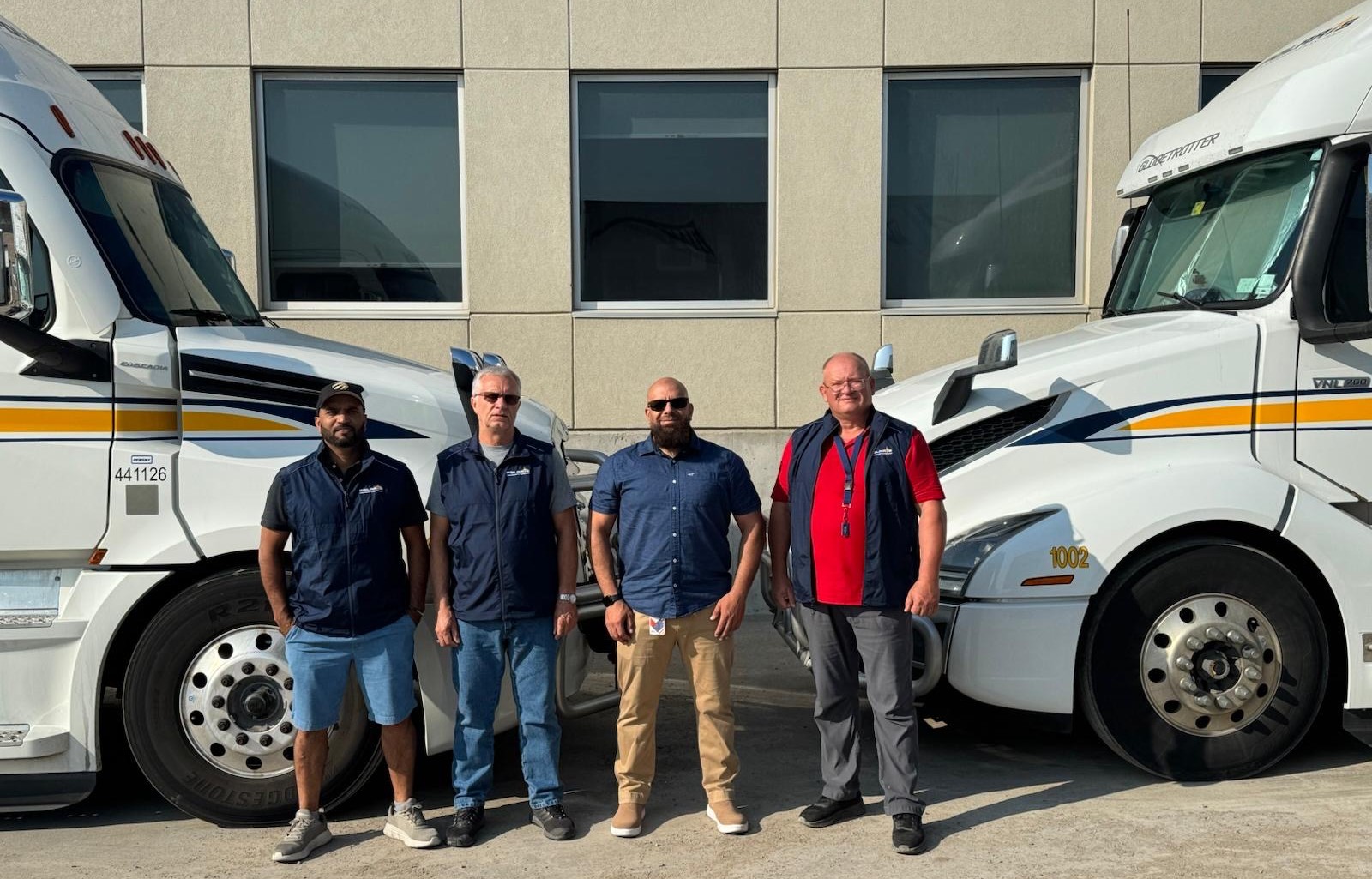
At Mississauga, Ont.-based Polaris Transportation Group, emergencies are grouped into five categories: natural disasters or environmental hazards, civil disruptions, roadside emergencies, cross-border and regulatory events, and technology or infrastructure failures.

“A disruptive event is anything that poses an immediate or potential threat to driver safety, public safety, freight integrity and even operational continuity,” said Mo Baki, director of operations at Polaris. He says to both managers and drivers, “Expect the unexpected.”
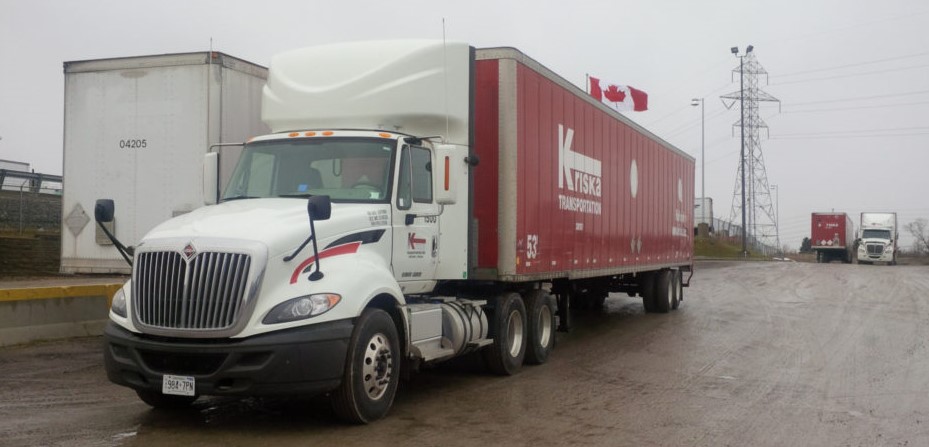
Kriska Transportation Group (KTG) shares that outlook. Eugenia Churilov, the fleet’s director of safety, compliance and security, pointed to her own experience managing trucks in the U.S. during the Sept. 11 terrorist attacks in 2001.
“I lived through 9/11 with my trucks being in New York and New Jersey on the day of the disaster. And we’ve learned a lot from that, and there’s been a lot of changes, of course, in the industry and technology-wise.” She recalls, “Trucks were shut down. People couldn’t get out. People couldn’t cross the border, [it] was shut down…It was a lot of destruction, chaos. And people were scared. People were very scared.”

That experience now informs her approach at KTG, where onboarding always stresses accident protocols and communication tools so drivers know exactly who to call and what to do.
“Every business should be prepared for disaster, and it’s important to have a business disaster recovery plan,” Churilov added. “We always say, ‘What if a bomb falls on a building? What are you going to do? How are you going to operate, and how are you going to keep the business running?’ And if you cannot come to your office tomorrow, [it] is very important to have a business continuity plan.”
Structured but flexible training
At Polaris, five categories form the backbone of a training program that begins with onboarding and is reinforced through quarterly refreshers, in-person demonstrations, and simulator drills based on real events, including the 2023 wildfire season and 2022 Freedom Convoy.
Baki described the system as incredibly structured but flexible, continuously updated through accident and near-miss reviews. The carrier’s Accident Review Committee is comprised of people from different departments, from operations and driver management to safety, risk and compliance, HR and logistics departments, he added.

One review came after a driver admitted he froze in reacting to an event on the road. “It wasn’t anything major,” Baki said. “Somebody cut in front of them, stopped really fast, and there was a little bit of a hesitation in that reaction. And speaking to the driver, the driver was very, very open and honest about it, [saying], ‘I froze for like a split second.’
“That’s where we started to take a look at our emergency scenario training and expanded it to include not just the regular emergencies, but the common everyday happenings.”
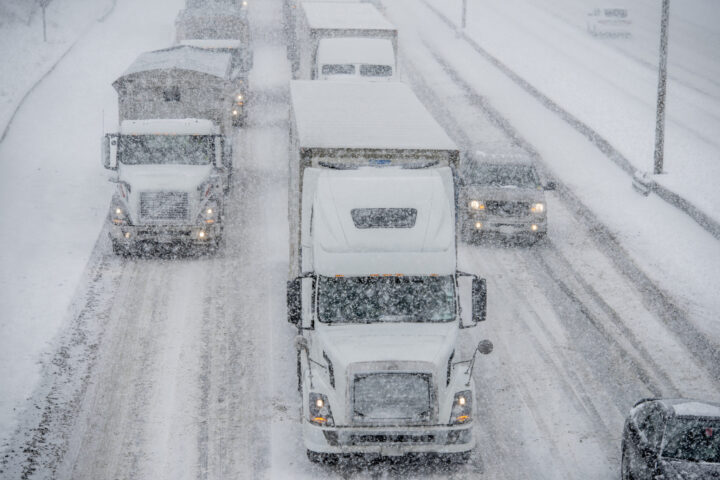
KTG also introduces drivers to all company policies and procedures during onboarding, with especially strong emphasis on emergency protocols and accident response and reporting protocols. New drivers complete six weeks of in-cab training, followed by shadow runs on which another truck follows along their route to provide support. A dedicated program for winter hazards helps less experienced drivers face icy roads, heavy snowfall, and reduced visibility, Churilov said.
Technology as a lifeline
And both fleets say technology has become central to how they support drivers in crises.
KTG equips its trucks with Isaac Instruments tablets that include an emergency button connected to a 24/7 security desk. “We did create – a very long time ago, even before Covid – an emergency button on our Isaac tablet,” Churilov said. “We do use Isaac for our ELD and telematics, and Isaac’s been really great for us.” When pressed, the system alerts dispatch and security, which can escalate to 911 calls with the truck’s location.
The fleet has also added carbon dioxide detectors in the cabs. Churilov described a case in which a detector went off because another truck was idling nearby, protecting a driver from possible carbon monoxide poisoning. “The team guided her and asked her to switch the spots from where she was, and apparently the CO2 was getting into the cab from a truck that was parked beside her.”
At Polaris, dynamic routing software integrates with AI-driven weather overlays to reroute trucks in real time around wildfires, whiteouts, or closures. Drivers also share information among themselves. While the primary channel is telematics, Polaris mandates inter-driver communication and supplements it with WhatsApp groups so drivers can trade updates from the road.
“I can’t really say that we’ve experienced anything that has not helped. Anything helps,” Baki said of technology. “It’s just a matter of how we use it and [if it is] something that we can customize to make even better.”
Dispatch and 24/7 support
Behind the wheel, drivers’ support networks matter as much as the equipment and technology they use.
This is why Polaris requires dispatchers to spend time in trucks with the drivers. “Every dispatcher has to spend time in the trucks without question,” Baki said when asked about how the carrier ensures dispatcher and drivers relationships are free of conflict and tension. “We can’t ask them to understand what the drivers go through without at least having that real life experience and appreciation for what drivers do.”
The fleet is even considering making it mandatory for dispatchers to spend two days each quarter on the road — one in a straight truck, the other in an 18-wheeler.
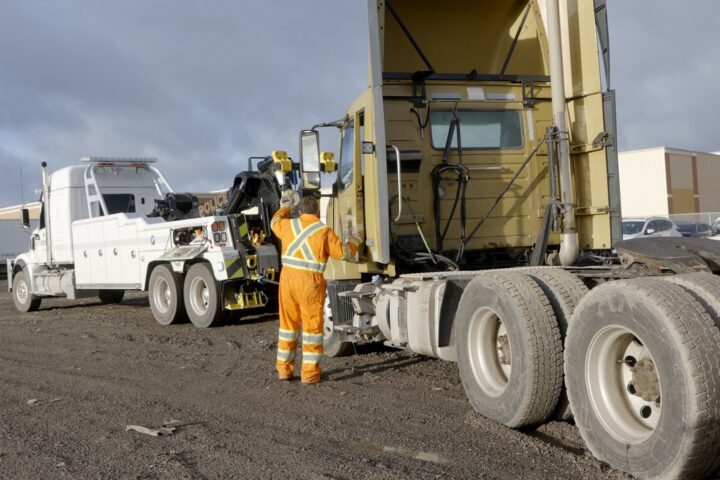
KTG, meanwhile, has dedicated 24/7 security and breakdown teams. Security manages incident triage, while breakdown coordinates towing, hotels, or rescue drivers if repairs or hours-of-service issues leave drivers stranded on the road.
Another big part of drivers’ safety is mental readiness and post-incident care. Churilov said KTG ensures assistance programs are available to help drivers process traumatic events, acknowledging that reactions to different events on the road vary.
Baki added Polaris expands scenario drills after reviewing incidents in which drivers hesitated under stress to ensure an extra layer of preparedness.
The results of the fleets’ methods pay the dividends. Among the most recent incidents, a KTG driver with Mill Creek Motor Freight rescued a family from a car that caught fire moments after he had assisted them. And Polaris’ Baki described a winter case in which a driver was on a time-sensitive run but stopped to help multiple motorists during a whiteout, coordinating with dispatch before assisting until emergency crews arrived.